Quick answer
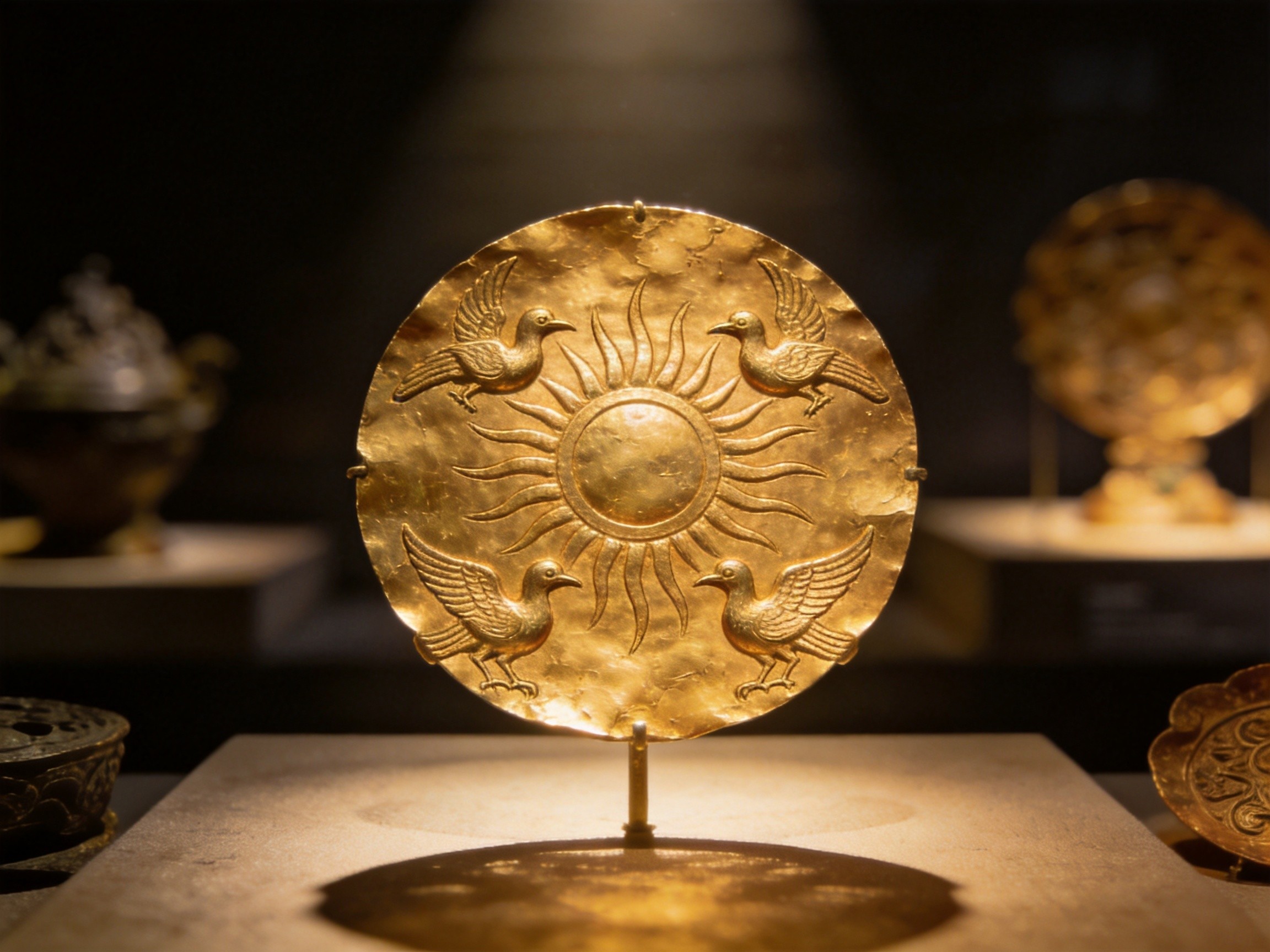
Thousands of years before Chengdu was Chengdu, the ancient Shu kingdom here produced bronze and gold work found nowhere else in China. The Jinsha Site Museum, inside the city, holds the gold 'Sun and Immortal Birds' ornament — now Chengdu's official city emblem. Sanxingdui Museum, about 1.5 hours away, holds the famously strange bronze masks with jutting eyes and oversized ears. Both are real archaeological sites, not reconstructions, and together explain a Sichuan civilization that developed in striking isolation from the rest of ancient China.
- Jinsha Site Museum
- Inside Chengdu, ≈20 min from the centre
- Sanxingdui Museum
- ≈1.5 hrs from Chengdu by car
- Jinsha icon
- Gold Sun and Immortal Birds ornament
- Sanxingdui icon
- Bronze masks with jutting eyes
- Civilization
- Ancient Shu kingdom, Bronze Age Sichuan
A civilization that doesn't look like the rest of China
Most visitors' idea of ancient China comes from the Yellow River dynasties — bronze ritual vessels, oracle bones, the terracotta army. The Shu kingdom that ruled the Sichuan basin over 3,000 years ago made almost none of that. Instead it left towering bronze figures, gold foil ornaments and masks with wildly exaggerated, almost alien features. Archaeologists are still debating what its beliefs and rituals actually were — it is one of the biggest open questions in Chinese archaeology.
The two sites that tell this story, Jinsha and Sanxingdui, were both discovered by accident within the last century, and both are genuine excavation sites you can visit, not replicas.
Jinsha Site Museum — Chengdu's own emblem
Discovered in 2001 inside what is now the city of Chengdu, Jinsha is built directly over part of the dig, so you walk past the actual excavated ground. Its single most famous object is a thin gold disc showing four birds flying around a sun — the 'Sun and Immortal Birds' ornament, which Chengdu adopted as its official city emblem and tourism logo. You will see this image on manhole covers, lamp posts and souvenirs all over the city once you know to look for it.
Because it is inside Chengdu, Jinsha fits easily into a half-day with other sights and needs no special planning.
Sanxingdui Museum — the uncanny bronze masks
Sanxingdui, about 1.5 hours from central Chengdu, is where the Shu kingdom's strangest treasures were found: bronze masks and heads with huge jutting eyes, oversized ears and gold foil masks, along with a bronze 'sacred tree' over 4 metres tall. Nothing else like them has been found anywhere in the ancient world, which is exactly why they draw visitors and archaeologists alike. New pits are still being excavated, and the museum has expanded significantly in recent years to show the latest finds.
Because it's further out, Sanxingdui works best as a half-day or full-day trip rather than a quick add-on.
Which should you visit?
- Short on time or already busy with pandas and old streets: Jinsha fits easily inside the city.
- Deeply curious about ancient history, or on a longer stay: add Sanxingdui as its own half-day trip.
- Both museums have excellent English captions and are comfortable for a casual visit, not just specialists.
How Chengdu Buddy helps
We can slot Jinsha into a city day, or arrange a private car and companion out to Sanxingdui so you don't have to work out the bus connections yourself. Message us if ancient history is on your list and we'll fit it around pandas, food and the rest of your trip.
Independent local companion & travel-assistance service. Not a licensed tour guide or travel agency. Prices, opening hours and visa rules can change — please confirm current details before you travel.